

Introduction
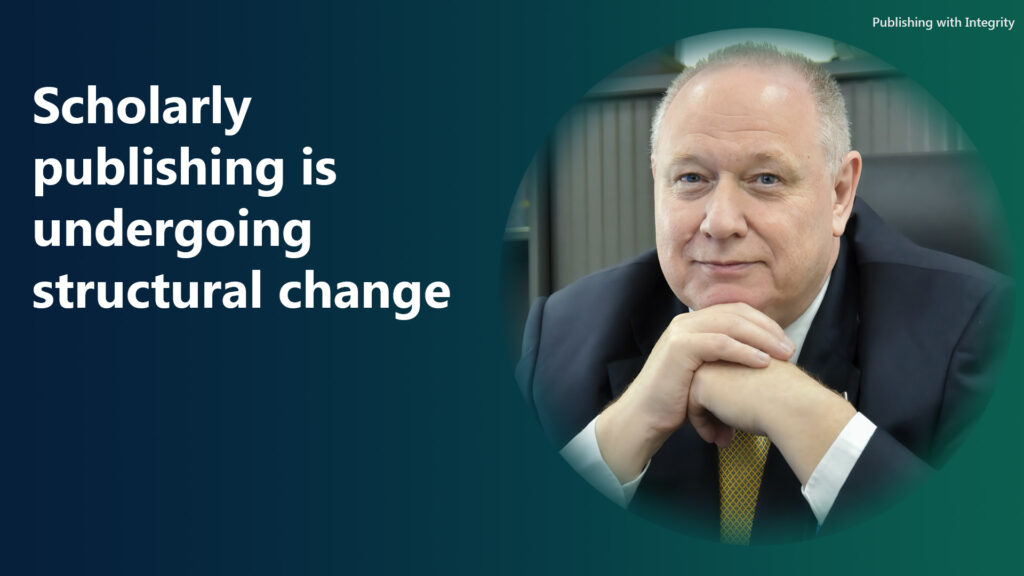
Over the past decade, the volume of published research has dramatically increased. New journals have entered the market. Open access has grown. Special issues have proliferated. Submission platforms have become automated. Editorial workflows have accelerated. Artificial intelligence tools now assist with drafting, summarisation and language refinement.
Academic careers have become much more visible, with metrics to compare one scholar against another. Publication lists are scrutinised in hiring decisions. Promotion frameworks quantify output. Funding applications require evidence of sustained productivity. Citation indicators are publicly available. Rankings incorporate research performance into institutional reputation.
Publication is no longer simply a vehicle for sharing knowledge. It is now the currency of academic progression and rankings. When careers depend on measurable outputs, the pressure to optimise those measures increases.
Researchers are not inherently dishonest
Most researchers do not approach their work with unethical intent. On the contrary, the vast majority care deeply about scholarly standards. However, incentive systems influence behaviour, often gradually, often subtly. Of course, there are those that game/abuse the system knowingly.
Under sustained pressure, small adaptations can become normalised:
- Submitting to journals without thorough due diligence.
- Accepting authorship invitations that stretch conventional contribution standards.
- Padding reference lists to satisfy expectations.
- Responding to aggressive calls for papers without interrogating editorial quality.
- Using generative tools to draft sections of text without clear disclosure.
None of these shifts may begin as deliberate misconduct. Many are rational responses to workload, competition and institutional expectations.
Unethical practices
At the more visible end of the spectrum are predatory journals. These are publications that prioritise revenue, losing sight, or just ignoring the normal academic standards we would expect from a peer reviewed journal. But predatory publishing is only one dimension of a wider integrity landscape.
More complex risks have emerged:
- Paper mills that fabricate manuscripts at industrial scale.
- Purchased authorships that distort contribution and accountability.
- Citation manipulation networks designed to inflate metrics.
- Undisclosed AI-generated text that introduces fabricated references or reasoning errors.
- Editorial conflicts of interest that compromise independence.
These phenomena differ in severity and intention, but they share a common feature: they exploit weaknesses in the publication ecosystem.
Trust
The credibility of scholarship rests on trust. Trust that authors conducted the work described. Trust that data are authentic. Trust that peer review occurred as represented. Trust that editorial decisions were made independently and transparently.
When that trust weakens (as it has), the damage is not confined to individual papers. It affects the confidence in institutions, disciplines and the general public. In an era where science informs policy, public health and economic strategy, erosion of trust carries wider consequences.
It would be easy to frame these issues as moral failures of individuals. That explanation is too simple and incomplete.
A more difficult question is whether current incentives, metrics and career structures amplify risk. When productivity is rewarded more than robustness, behaviour adjusts accordingly.
What can you expect from this newsletter?
Integrity challenges rarely appear suddenly. They accumulate quietly. They are often difficult to spot. They are often ignored. It may be assumed that there are ethical issues, but the problem is too small to worry about, so no action is taken. If you don’t understand the publishing process, you may not be aware of the problems that exist.
Of course, there are scholars (and perhaps they should not be given the courtesy of being called scholars) that simply abuse the system. Even if we know this, we may be constrained in what we could do. Perhaps international boundaries restrict what can be done. Perhaps institutions would rather ignore the issue, for fear of reputational damage. Or, perhaps, publishers (even those we consider legitimate) struggle to balance academic integrity with the bottom line.
Individual scholars may want to act ethically but struggle to develop their career in an ethical way. Developing a research career has always been difficult. It is now complicated further by navigating an expanding landscape of ethical risk.
This newsletter will address:
- How incentive systems shape publication behaviour.
- Where grey zones are expanding.
- How emerging technologies alter authorship and accountability.
- How researchers can protect their own credibility.
- How institutions can strengthen safeguards without stifling scholarship.
- How researchers can develop their own careers in the shifting landscape in which we now operate.
Final thoughts
Integrity in publishing is not static. It is continual, requiring judgement, awareness, adaptation and a willingness to operate in an ethical way.
Scholarly communication underpins academic credibility. It also underpins the legitimacy of research in society. When the reliability of the publication system is questioned, the consequences extend beyond academia.
The question is not whether isolated cases of misconduct exist. They do and always have. The real question is whether scholarly publishing is resilient enough for the environment in which it now operates.
If peer reviewed publications define academic credibility, what happens when confidence in the publication system itself begins to erode? We hope to consider this broad, and complex area, but we would welcome your thoughts and views.
About me
I have worked within scholarly publishing for more than two decades, as an author, editor, reviewer and university leader. I have also analysed the structural weaknesses that have emerged in recent years. My aim is not to criticise from the sidelines, but to examine the system carefully and constructively. This is the aim of this newsletter and the various social media channels that I post on.
Continue the conversation
If you are an institution seeking to strengthen your approach to research integrity, or a publisher reflecting on emerging risks, I would welcome a conversation.
If you are an individual researcher, I would be interested to know which aspects of publishing you find most uncertain or difficult to navigate.
Future editions can respond to the issues that matter most to you.
Integrity in publishing is a collective responsibility. Thoughtful dialogue is part of the solution.